Showing posts with label wheelsets. Show all posts

Wednesday, 17 June 2020

Maintenance of Way train


Some time ago I found an IHC maintenance of way (MOW) set for sale second hand. The cars were all different colours and road names. I've always liked grey MOW cars so repainted and detailed them. 

I kept the IHC trucks but replaced the wheelsets with Walthers Proto 33" wheelsets. I probably should have replaced the trucks too, as they are not the best. Even tuning with my MicroMark truck tuner hasn't made the wheelsets roll as freely as I would like. However, the train still rolls pretty well, stays on the track and doesn't spend a lot of time on the layout, so it's not really an issue. The one drawback is that several of the cars are very heavy relative to my other rolling stock. I find that the Jupiter and 119 cannot pull a full MOW train up my grade. In the future, I may put a couple of cars on a diet and remove some of the weight. 

The train is made up of a blacksmith car, complete with forge and a stash of tools. A rail and tie car, a derrick car, and a gondola with ballast. Add a flat car to the mix and you have everything you need to respond to a wreck or maintain the tracks.


Blacksmith car

Rail and tie car

Derrick car

The full MOW train parked on the canyon trestle.

Saturday, 8 June 2019

Improving Bachmann's old time cars

The turn of the century modeller is not spoilt for choice when it comes to ready to run locomotives or rolling stock models.

There are a number of very nice kits made by manufacturer's specialising in turn of the century equipment. However, I do not own any of them. One-third of my rolling stock is made up of Bachmann old time cars. When I started out in turn of the century modelling all I had was four Bachmann old-time freight cars and three passenger cars. I was able to find more of these 34' freight cars for sale second hand to grow my rolling stock fleet. Most cost between NZ$8-12  per car.


Thoroughfare Gap Railroad
Rolling stock by manufacturer
ManufacturerNumber of each%
Bachmann1733%
Frateschi12%
IHC918%
Kitbash12%
Mantua714%
MDC24%
Roundhouse1020%
Scratchbuilt48%
Grand Total51100%

Most of the Bachmann freight cars are flat cars or gondolas and the detailing is more toy-like. Even so, a little weathering goes a long way in making these cars look better. Over time, I've painted and weathered the decks to look like grey weathered wood and some added custom decals.

To get the cars to run reliably, I replaced the thickly moulded trucks with Walthers proto arch-bar trucks and wheelsets. In doing so I also body mounted the couplers.  I find body mounted couplers much less likely to derail when shoving a string a of cars while switching.

Even after all these improvements, the height of the cars has still bothered me. The car body itself is quite thick as it accommodates a metal plate to give the car enough weight to track well. In addition to this, the cars bolsters are quite high, meaning the car body sits high on the trucks. All this means these cars are obviously taller when sitting next to other cars on the layout.

I decided to try lowering these cars and I'm quite pleased with the results. I filed down the bolsters leaving enough clearance for the trucks and wheelsets to pivot over rough track. I also removed the metal weight. This allowed the plastic shell to fit slightly lower over the plastic underbody.

Bachmann Old-time gondolas, the lowered car is on left, original on the right. Side by side, the height difference is very noticeable. The plastic stirrups have been cut off to be replaced by metal ones. 

The only problem now was the lack of weight. I cut out a section of the plastic underbody frame and filled it with lead shot until the cars achieved the desired weight. The lead shot was glued in place with PVA glue.

So far, I've lowered two of these cars, but they appear to be tracking around the layout just fine. I'll be slowly working my way through the roster.


Saturday, 1 June 2019

Derailments

Recently, I had the privilege of a visit from some fellow model railway enthusiasts. Before my guests arrived I cleaned the tracks, made up several trains and test drove them around the layout to ensure everything was working properly. When my visitors arrived, we started running the trains around the layout. Unfortunately, every train that ran encountered at least one derailment in its passage over the layout. While it didn't dampen my visitor's spirits, I was disappointed the layout ran so poorly. I decided to take steps to minimize further derailments. Firstly I resolved to troubleshoot derailments when they occur. Upon reflection, when I am running trains by myself, I’ve tolerated small derailments because I don't want to interrupt my operating session. I think this lead to a mental bias that the layout actually was running better than it actually was. I’ve accepted that my operating sessions will be interrupted for now. But it will be so I can enjoy more trouble free running in the future. If I can’t resolve a derailment at the time, I will document it, the locomotives and cars involved and work on it at a later date.

Sometimes derailments are easily rerailed in the moment. But stopping to troubleshoot the problem should reduce problems in the future. 

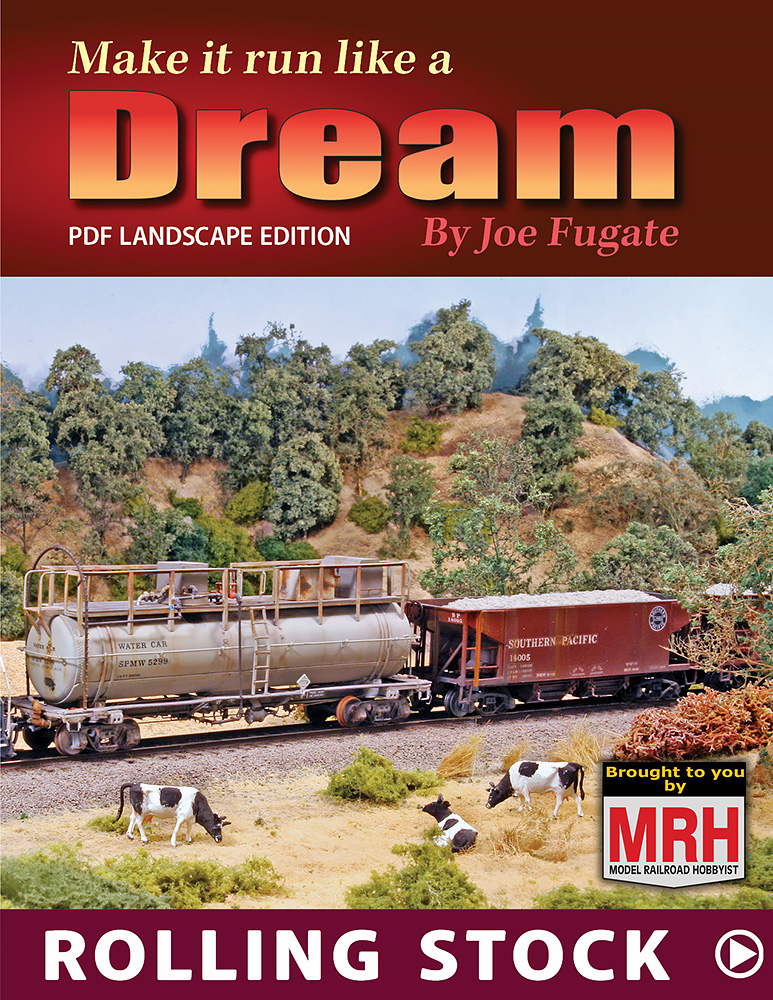
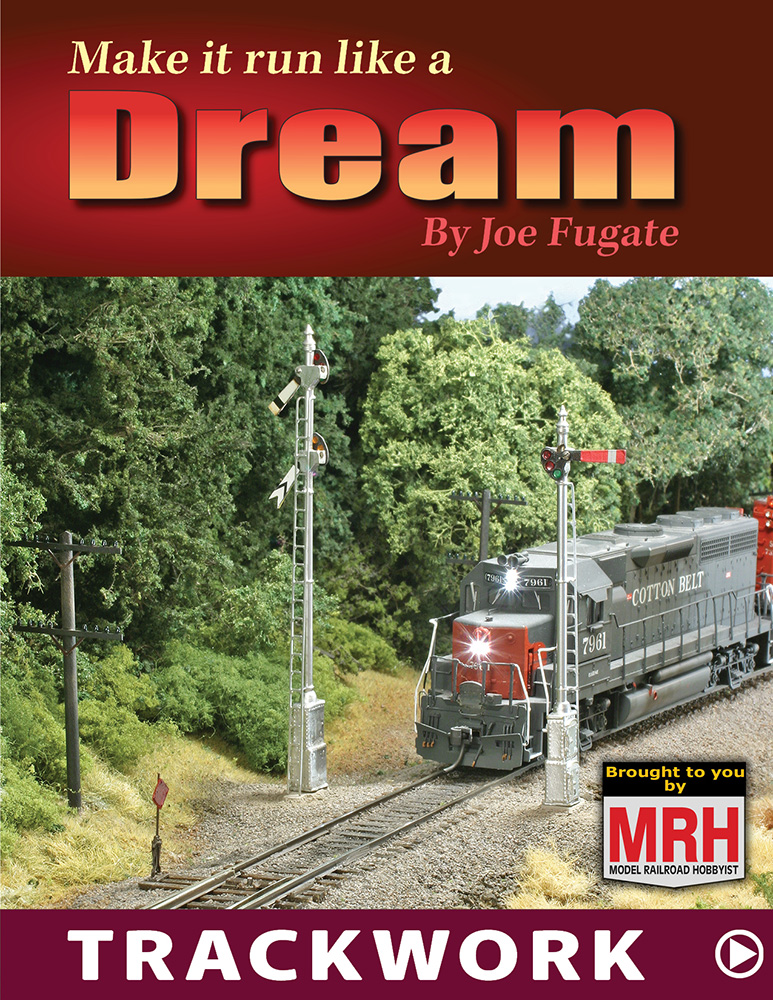
Troubleshooting invariably requires some patience and observation as to what is occurring at the site of a derailment. I've found an HO standards gauge is indispensable when diagnosing problems. By studying my derailments more closely, I could see that most of the cars involved were using Kadee metal wheelsets with plastic axles. About half my rolling stock was equipped with Kadee’s and half with Walthers Proto 33” wheelsets. The Walthers wheelsets are all metal, including the axles. I had found that on my trackwork, the Walthers wheelsets ran smoother and the cars rolled more freely than the Kadee wheelsets. So I decided to standardise and purchased more Walthers Proto 33” wheelsets for the rest of the fleet. Since installing the new wheelsets I’ve seen a dramatic drop in the number of rolling stock derailments. I’m not saying the Walthers wheelsets are better outright, they just appear to work better with my track, which I concede is a bit rough in places. One resource I have found helpful is Joe Fugate’s Make it run like a Dream series. So far Joe has released two books, available in print or ebook, and is working on the third concerning locomotives. Joe shares a multitude of insights and tips to help attain trouble-free running. You can find Joe's books for sale at the Model Railroad Hobbyist store.